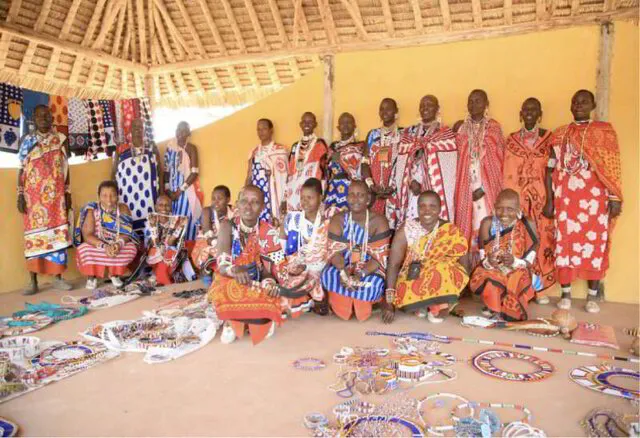
For us, conversations around women empowerment in Africa are never separate from conversations around systems, history and the quiet structures that shape everyday life.
Before empowerment can be meaningful, there has to be a clear understanding of the environments women are navigating. Many of these structures are deeply rooted in long standing patriarchal systems that have shaped access, voice, land ownership and economic participation across generations. They are not always visible, but they are present in how communities function, how decisions are made, and how opportunity is distributed.
This is why we think of empowerment not as a single intervention, but as a layered process that must be culturally aware, historically informed and deeply respectful of context.
In Samburu County, Umoja Village offers one of the most powerful examples of women-led reimagining of community life. Founded by Rebecca Lolosoli, Umoja was created as a safe haven for women seeking refuge from violence, exclusion and forced societal norms.
Over time, it evolved into something far more profound than a place of safety. It became a matriarchal space where women collectively built systems of governance, education, income generation and identity on their own terms. What stands out to us is not only resilience, but authorship. The ability of women to define what community means when given the space to lead it.
Tourism, when designed intentionally, can either reinforce imbalance or help gently reframe it.
Across Laikipia North, women’s collectives are showing what it looks like when community led systems begin to shift toward inclusion and resilience. Among them is the Twala Tenebo Women Group, a collective of women engaged in beadwork, cultural preservation, conservation partnerships and shared economic enterprise.
Their work is not performative. It is structured, consistent and rooted in cooperation. It reflects a different kind of economic participation, one that is relational rather than extractive, and deeply tied to place.
Nearby, other women’s groups across Laikipia North are also building similar ecosystems of livelihood through craft, land stewardship and community tourism. Together, they form part of a wider, quieter transformation of rural economies led by women who are often the custodians of both culture and continuity.
When viewed through the lens of travel, these are not simply “community visits.” They are invitations into systems of meaning. Into ways of living that require slowing down enough to understand what is actually being built.
This is where regenerative tourism becomes meaningful. Not as a concept, but as practice. One that asks who is included, who benefits, and how experiences are shaped with dignity at the centre.
At Halisi Africa Discoveries, we are increasingly drawn to journeys that slow people down enough to actually see these systems. To understand that behind every landscape is a social fabric, and behind every experience are women holding communities together in ways that are often unseen.
There is something deeply transformative about witnessing that quietly, without interference, without extraction, and with full respect for the integrity of those spaces.
And perhaps this is what true luxury begins to look like in Africa today. Not distance from reality, but a more intimate and thoughtful way of being present within it.
Curate a private, intentional journey with Halisi Africa Discoveries, where we shape each experience slowly, guide it thoughtfully, and design it in deep respect for the women, communities and landscapes that define Africa’s most meaningful stories.
